Horaizon Orthopedic Implants
What is the minimum order quantity for custom orthopedic implants? The answer is rarely a fixed number. It depends on implant geometry, material, patient-matching requirements, validation costs, and the manufacturer’s production workflow. A single custom titanium pelvis may require more engineering than several standard components.
The global orthopedic implants market reached approximately USD 45.2 billion in 2023, according to Grand View Research. Meanwhile, the Wohlers Report 2024 valued the broader additive manufacturing industry at USD 20.0 billion in 2023. These figures show strong industrial capacity, but they do not create one universal MOQ. Custom production remains highly project-specific.
Terry Wohlers, a widely recognized additive-manufacturing analyst, has said, “Additive manufacturing is a tool, not a solution by itself.” That warning matters here. Low-volume production can reduce inventory, yet design review, inspection, sterilization planning, and regulatory documentation may still create substantial fixed costs.
A practical supplier may accept one implant for a complex clinical case. Another may require five, ten, or more units to justify setup and quality-control expenses. The number alone can mislead. Unit price, lead time, design ownership, material certification, and revision fees deserve equal attention.
Ask for a written quotation.
Also ask what the MOQ includes. Does it cover engineering changes? CT-based modeling? Mechanical testing? Packaging? These details often explain unexpected costs. The safest purchasing decision balances clinical specificity with verified manufacturing capability, rather than chasing the lowest advertised quantity.
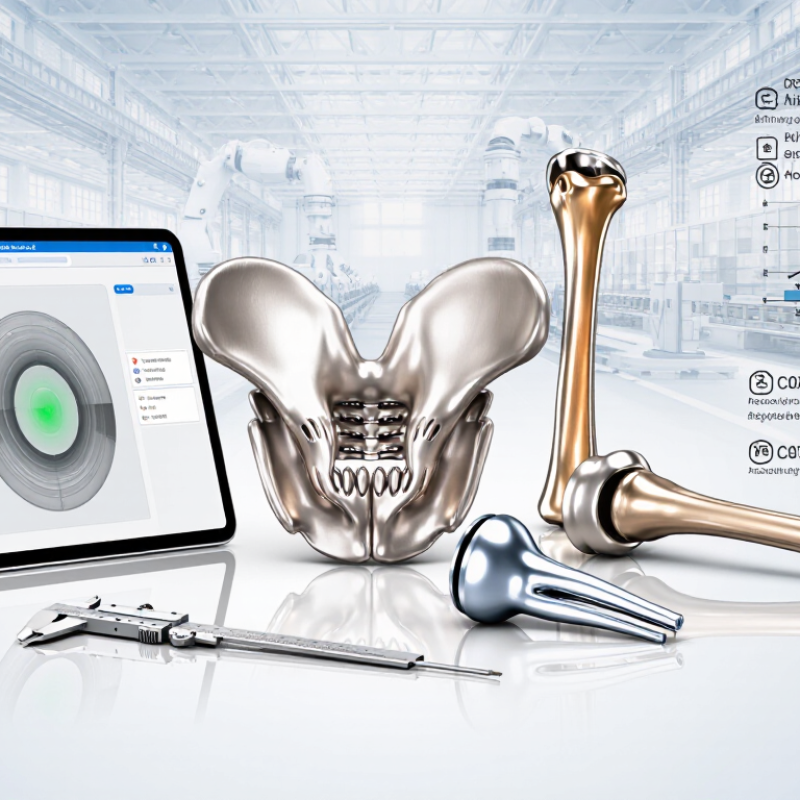
For custom orthopedic implants, MOQ means the minimum order quantity a manufacturer accepts for one design or production batch. It is not always a fixed number. That is the baseline. The quantity may change with implant geometry, alloy, coating, machining method, and inspection requirements. A simple trial batch could require fewer units than a complex joint component.
Manufacturers set MOQs to control setup, tooling, programming, material purchasing, and quality testing costs. For example, producing ten titanium implants may involve the same machine preparation as producing fifty. Each unit may also need dimensional checks, surface inspection, documentation, and traceability records. These steps support consistent quality and patient safety.
MOQ does not mean buying unnecessary inventory. It means sharing production costs across an agreed quantity.
A practical buyer should ask whether the MOQ applies to each size, design, or total purchase order. Prototype quantities may be negotiable, especially during design verification. Production orders usually have stricter requirements. Lead time, sterilization planning, packaging, and regulatory documentation can also affect the quoted quantity.
A common planning mistake is comparing MOQs without comparing the included services. A low MOQ may hide higher unit costs. The first estimate is rarely perfect. Design changes can reset tooling or inspection work. Clear drawings, material specifications, acceptance criteria, and a realistic forecast help both sides calculate a workable MOQ.
What Is the MOQ for Custom Orthopedic Implants?
For custom orthopedic implants, MOQ rarely depends on quantity alone. Design complexity often determines the real production threshold. A simple plate with standard holes may require only a small pilot batch. A patient-specific pelvic implant can demand extensive engineering before production begins. Complex geometry, porous surfaces, unusual fixation points, and multiple anatomical sizes increase setup time and inspection costs.
Small details matter. A curved implant may need several machining fixtures. Internal channels can require specialized manufacturing steps. Each surface must meet defined dimensional and finish requirements. Engineers may also inspect CT-based models, verify fit, and document material traceability. These activities can make a single implant expensive, even when the supplier accepts one prototype.
Production MOQ usually becomes more practical after design validation. A supplier may suggest five to twenty units for an early clinical or evaluation batch, while larger runs can reduce the unit cost. However, this range is not universal. Material availability, manufacturing capacity, testing requirements, and packaging controls can change the quotation. Ask for separate pricing for design work, prototypes, validation, and repeat production.
A common mistake is requesting a low MOQ before finalizing the design. That approach can create repeated fixture changes and delayed inspections. It may also hide costs in later revisions. A reliable discussion should include drawings, expected annual demand, tolerance zones, surface requirements, and acceptance criteria. I would also question any quote that gives a fixed MOQ without reviewing the implant’s geometry. Estimates made too early are often incomplete.
For custom orthopedic implants, MOQ depends less on the implant’s size than on its material and manufacturing route. Titanium alloy usually supports lower MOQs when produced by CNC machining or additive manufacturing. A small pilot batch may contain five to twenty units. Each unit still requires inspection, surface finishing, and traceability records.
Cobalt-chrome often creates higher minimums. Its hardness increases machining time, tool wear, and fixture costs. Forging may require dedicated dies, making small batches uneconomical. PEEK can reduce machining difficulty, but implant-grade material, sterilization studies, and validation still add fixed costs. The 2024 MarketsandMarkets orthopedic implants report projected the sector to grow from about USD 47.9 billion in 2023 to USD 63.6 billion by 2028. Growth does not automatically reduce MOQ.
Additive manufacturing changes the calculation. Several implant geometries can share one build, reducing tooling expenses. However, powder qualification, build monitoring, heat treatment, and CT inspection remain necessary. The Wohlers Report 2024 identified medical applications as a major area for additive manufacturing adoption, but it did not suggest that certification becomes cheaper. In practice, suppliers may accept one prototype, then request ten or more validated units. That estimate is not a promise. Complex porous surfaces can extend production time unexpectedly. Even experienced teams sometimes underestimate post-processing labor. A lower MOQ may therefore increase each implant’s unit price sharply.
Custom orthopedic implants rarely have a simple minimum order quantity. Regulatory and quality requirements often shape the MOQ more than production capacity. Each design may require documented material verification, dimensional inspection, biocompatibility evidence, and controlled manufacturing records. These steps create fixed costs before the first implant is shipped.
A small batch can still require process validation, equipment qualification, cleaning records, and sterilization checks. Traceability must cover raw material certificates, machining parameters, inspection results, and final release approval. In practice, a supplier may set an MOQ to spread these costs across several units. A complex spinal component may need more testing than a simpler trauma plate. The difference can be substantial. I have seen planning models underestimate documentation time. That mistake can distort the real MOQ.
Tips: Ask for an MOQ breakdown, not only one final number. Separate engineering, validation, inspection, sterilization, and production quantities. Confirm whether tooling or test fixtures are included. Request sample quality records and a clear change-control process. Discuss forecast flexibility, because regulatory review may be repeated after design changes. A lower MOQ may look attractive, but it can increase the unit price and create scheduling pressure. Quality teams may also reject a batch if records are incomplete. Small orders are possible, but they need careful planning and realistic evidence requirements.
What Is the MOQ for Custom Orthopedic Implants?
Minimum order quantity is rarely a fixed number for custom orthopedic implants. It depends on material, machining, tooling, inspection, packaging, and sterilization requirements. Grand View Research estimated the global orthopedic devices market at approximately USD 47.4 billion in 2023. That scale encourages manufacturers to protect production efficiency, but buyers should not accept a large MOQ without evidence.
Ask for a tiered quotation. Request prices for 10, 25, 50, and 100 units. A pilot batch can test fit, surface finish, documentation, and delivery reliability. Keep the initial design frozen. Frequent changes may restart validation work and increase costs. A low MOQ is not automatically a win. It can create higher unit prices or unused inventory.
Negotiate with facts, not promises. Share a realistic 12-month forecast, expected launch timing, and annual demand range. Ask whether tooling costs can be separated from implant prices. Confirm who owns the tooling and how unused components are handled. ISO 13485:2016 requires controlled production and traceability, so quality records should be included in the discussion. Ask for inspection criteria, batch records, nonconformance procedures, and change-notification terms.
A flexible agreement may include a small first order, scheduled releases, and price reductions after verified volumes. Avoid promising rapid growth without purchase evidence. It weakens credibility. This approach is imperfect, especially for highly complex implants, but transparent data usually creates better negotiating leverage.
Custom orthopedic implant MOQs vary by material, manufacturing process, tooling requirements, sterilization, and regulatory documentation. The planning ranges below reflect commonly negotiated order quantities for custom production rather than fixed industry rules. Buyers can often reduce the initial MOQ by separating tooling charges, using a pilot batch, combining compatible designs, or agreeing to a rolling forecast with scheduled releases.
MOQ means the minimum quantity accepted for one design or production batch. It is not always fixed.
Production involves programming, tooling, material purchasing, and quality testing. Making ten units may require the same setup as making fifty.
It can apply to each size, design, or the total purchase order. Confirm this detail before comparing quotations.
Often, yes. Prototype quantities may be negotiable during design verification, while production orders usually have stricter requirements.
Material verification, dimensional checks, traceability, and release records create fixed costs before shipment. These costs may be shared across several units.
Records can include material certificates, machining parameters, inspection results, cleaning details, and final approval documents. Missing records can delay release.
No. A smaller order may increase the unit price and create scheduling pressure. The cheaper-looking option may not be cheaper overall.
Request separate quantities for engineering, validation, inspection, sterilization, and production. Also ask whether tooling and test fixtures are included.
Yes. A design change may require new tooling, programming, or inspection work. The first estimate is rarely perfect.
Provide clear drawings, material specifications, acceptance criteria, and a realistic forecast. Review the plan again when requirements change.
For custom orthopedic implants, MOQ refers to the minimum number of units a manufacturer requires in one production order. The answer to “What is the minimum order quantity for custom orthopedic implants” depends on factors such as implant complexity, customization level, and production efficiency. Simple designs may be produced in smaller batches, while intricate geometries, patient-specific features, or specialized tooling can increase setup time and raise the MOQ.
Material selection and manufacturing methods also influence order requirements. Advanced alloys, additive manufacturing, machining, surface treatments, and finishing processes may involve unique equipment, certification, or material purchasing constraints. In addition, regulatory documentation, quality testing, traceability, and validation procedures can make small-volume production more costly. Buyers can often negotiate MOQ by discussing phased deliveries, standardizing selected components, accepting longer lead times, or combining similar designs into one production plan. Clear technical specifications and realistic forecasting can help both parties reach a practical and cost-effective agreement.
