Horaizon Orthopedic Implants
Orthopedic implant compatibility with instruments is more than matching sizes on a tray. It involves geometry, connection design, material interaction, surgical technique, and manufacturer approval. A reamer may enter an implant opening, yet its teeth, rotation, or depth control may still be unsuitable. Small differences matter. They can affect insertion accuracy, fixation strength, or the surgeon’s control during a demanding procedure.
In practice, surgeons, operating-room nurses, and clinical engineers should confirm compatibility before the procedure begins. The implant system’s instructions for use, instrument list, and technical drawings provide essential evidence. Hospital records should also preserve lot numbers, sterilization information, and verification results. How to check if orthopedic implants are compatible with surgical instruments requires more than a visual inspection. Teams should compare the implant model, instrument reference, interface dimensions, locking mechanism, and intended surgical step. A documented trial fit may help, but it must follow approved procedures and never replace manufacturer guidance.
A familiar instrument can create false confidence. Even experienced teams may overlook a revised connector or a nearly identical implant generation. Therefore, compatibility checks should involve clear communication between the manufacturer, surgeon, sterile-processing staff, and hospital engineering team. Questions should be recorded, not remembered. If documentation is incomplete, the safest response is to pause and seek authoritative confirmation. This approach may feel slower, but it supports traceability, patient safety, and reliable surgical performance. Compatibility is verified evidence, not assumption.
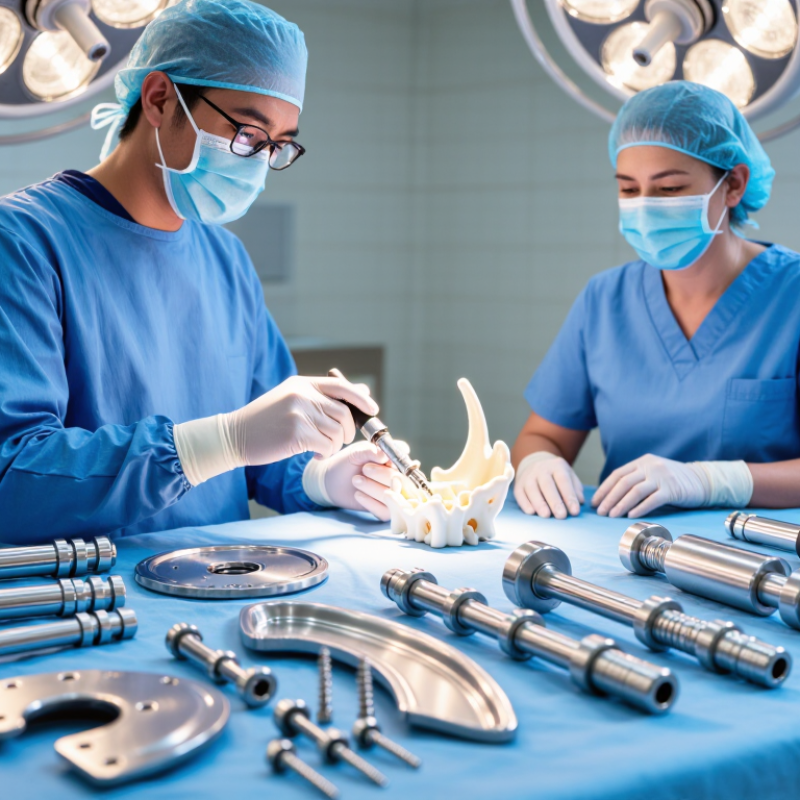
Orthopedic implant–instrument compatibility means more than matching labels. It requires three checks: fit, function, and safety. Fit confirms that the trial component, inserter, guide, and implant connect without excessive play. Function confirms accurate alignment, controlled insertion, and reliable locking. Safety covers material interaction, sterilization limits, torque control, and unintended tissue damage. A slightly loose interface can change implant position by millimeters. That small shift may affect load distribution, fixation, and postoperative stability.
Clinical teams should verify the implant system’s instructions for use, instrument revision, and approved combinations. FDA MAUDE data show that device problems are often reported through events involving breakage, misassembly, or difficult use, although these reports cannot prove causation. The WHO Global Patient Safety Action Plan estimates that one in ten patients experiences harm in healthcare, reinforcing the need for compatibility checks. ISO 14971:2019 also supports risk-based evaluation, rather than relying on appearance alone. Clean, undamaged instruments matter. So does correct calibration.
One practical lesson is uncomfortable: familiar instruments may not be compatible. A tray can look complete while missing a dedicated driver or depth-control feature. I have seen teams treat “it fits” as proof of safety. It is not. Compatibility should be confirmed before surgery through documented model numbers, connection testing, and staff review. Even these controls are imperfect when labeling is unclear or inventory changes quickly. That weakness deserves attention, not concealment.
Orthopedic implant compatibility begins at the interface, not at the operating table. A driver must match the implant recess in geometry, depth, and engagement angle. Hexagonal, star-shaped, and slotted interfaces transfer force differently. A shallow engagement may appear acceptable but can strip under torque. Small burrs or surface damage can create the same problem.
Tolerance control is equally important. Engineers should compare the implant interface with the instrument tip using calibrated gauges and dimensional drawings. Radial clearance, corner radius, and axial seating all affect contact quality. A few hundredths of a millimeter can change torque distribution. The instrument should seat fully without excessive wobble. It should also disengage without binding. Clean surfaces matter.
ASTM F543 provides recognized test methods for metallic bone screws, including driving torque, torsional strength, and pullout-related performance. These methods can support compatibility evaluations when the screw and instrument are tested as a working pair. Test fixtures should reproduce the intended loading direction and insertion conditions. Results need controlled records, not visual guesses. A bench fit is not proof.
A practical evaluation may include repeated engagement, angled loading, and post-test inspection of the recess. Inspectors should record deformation, debris, and changes in seating depth. One weakness remains easy to miss: instruments may pass static checks but fail after repeated sterilization cycles. That assumption deserves review. Geometry, material condition, and tolerance stack-up must be assessed together.
What Is Orthopedic Implant Compatibility With Instruments?
Check Materials: Corrosion, Wear, and ISO 10993 Biological Risks
Orthopedic implant compatibility means more than fitting an instrument into an implant. The materials must also remain stable during handling, cleaning, sterilization, and surgery. An instrument may be stainless steel, while an implant uses titanium or a cobalt-based alloy. When dissimilar metals touch in moisture, galvanic corrosion can occur. Body fluids make this concern more realistic.
Small scratches matter. Repeated contact can create fretting wear, especially around locking surfaces, threads, or guide holes. Tiny metal particles may remain after assembly or enter surrounding tissue. Residue from detergents, disinfectants, or poor rinsing can accelerate corrosion. In practice, I would inspect contact points under magnification, not rely only on appearance. Clean-looking parts can still carry microscopic damage.
ISO 10993 helps evaluate biological risks from materials and manufacturing residues. Relevant tests may address cytotoxicity, sensitization, irritation, systemic toxicity, or implant-related tissue responses. The correct test plan depends on contact type and exposure duration. It should also consider processing residues and wear debris, not just the raw material. Yet ISO 10993 is not a simple approval label. It does not replace engineering judgment, clinical evidence, or documented risk analysis. This is where teams can be overconfident. Compatibility claims should link material certificates, corrosion testing, cleaning validation, and real-use simulations. Thin evidence can fail under repeated surgical use.
Practical material-compatibility overview for orthopedic implants and surgical instruments. Actual suitability must be confirmed through design verification, sterilization validation, material certificates, and biological-risk assessment.
| Implant Material | Typical Orthopedic Use | Instrument Compatibility Considerations | Corrosion and Galvanic-Coupling Risk | Wear, Scratching, and Debris Risk | Relevant ISO 10993 Biological Concerns | Recommended Controls | Overall Compatibility Profile |
|---|---|---|---|---|---|---|---|
| Titanium and titanium alloys | Bone plates, screws, intramedullary nails, spinal components, and joint-related components. | Use dedicated instruments with smooth, undamaged contact surfaces. Avoid forceful contact with harder cutting edges that can create notches, scratches, or metal transfer. | Generally strong corrosion resistance because of the stable passive oxide layer. Risk can increase in crevices, under deposits, in damaged surfaces, or when electrically coupled to dissimilar metals in an electrolyte. | Scratching may damage the passive layer and create stress-concentration sites. Titanium can gall against titanium or other metals during high-load sliding contact. | Assess particulate and ionic release, cytotoxicity, sensitization, irritation, systemic toxicity, and chemical characterization where new or altered contact conditions exist. | Control surface damage; prevent mixed-metal contact unless evaluated; clean and passivate as specified; inspect instruments for burrs and wear; verify cleaning effectiveness. | Generally favorable |
| Cobalt-chromium alloys | Joint replacement components, fixation components, and wear-resistant metallic surfaces. | Instruments should not create deep scratches or metallic transfer on polished or articulating surfaces. Avoid uncontrolled contact with softer implant materials. | Usually high corrosion resistance due to a chromium-rich passive film. Fretting, crevice conditions, and surface damage may increase metal-ion release. | High hardness provides good wear resistance, but abrasive contact can damage mating surfaces and generate metallic particles. | Evaluate metal-ion and particulate release, cytotoxicity, sensitization, local tissue response, and toxicological risk when contact conditions or alloy combinations change. | Use protective handling methods; separate instruments for finished surfaces; inspect for scratches; characterize released substances when clinically relevant. | Favorable with surface protection |
| Stainless steel, including implant-grade austenitic grades | Bone plates, screws, wires, temporary fixation devices, and some instrument-contact components. | Compatibility depends on grade, heat treatment, passivation, and surface condition. Do not assume all stainless steels have equivalent corrosion behavior. | Susceptible to localized corrosion such as pitting or crevice corrosion when passive surfaces are damaged or exposed to chloride-containing conditions. Dissimilar-metal coupling requires assessment. | Instrument marks, burrs, and rough surfaces can increase wear and trap contaminants. Repeated sliding contact may generate metallic debris. | Consider nickel, chromium, and other released constituents; evaluate cytotoxicity, sensitization, irritation, systemic exposure, and chemical characterization as applicable. | Verify alloy identity and passivation; prevent chloride contamination; remove residues; inspect for pitting; avoid unassessed dissimilar-metal combinations. | Condition-dependent |
| Nitinol and nickel-containing shape-memory alloys | Flexible fixation devices, staples, clips, and selected minimally invasive orthopedic components. | Avoid sharp instrument contact, excessive bending, and surface gouging. Instrument contact must not compromise the oxide layer or alter the device shape. | Corrosion resistance depends strongly on surface treatment and oxide condition. Damage or poor processing may increase nickel release. | Surface damage can create corrosion sites and fatigue initiators. Repeated manipulation may contribute to fretting or functional degradation. | Nickel release requires careful assessment for sensitization and local biological effects. Chemical characterization and toxicological evaluation may be needed. | Control surface finishing and electropolishing where specified; limit manipulation cycles; inspect for scratches; verify nickel-release performance. | Requires focused evaluation |
| Alumina or zirconia ceramics | Articulating joint components and selected wear-critical surfaces. | Use non-damaging, clean handling instruments. Avoid impact, point loading, metal jaws on finished surfaces, and contact with particles that may cause third-body abrasion. | Ceramic surfaces are generally chemically stable and not prone to galvanic corrosion. Metallic contamination can still affect the interface or create abrasive particles. | Very low wear under suitable articulation, but ceramics are brittle and can chip or fracture if struck, clamped improperly, or contaminated with hard particles. | Evaluate particulate generation, local tissue response, cytotoxicity, and chemical characterization. Mechanical fragmentation risk should be considered alongside biological risk. | Use protective trays and soft-contact handling; prevent impacts; maintain cleanliness; inspect for chips, cracks, and surface defects before use. | Low chemical risk; high handling sensitivity |
| Ultra-high-molecular-weight polyethylene (UHMWPE) | Bearing inserts, liners, spacers, and other polymeric articulating components. | Do not use sharp or serrated instruments on bearing surfaces. Avoid compression marks, cuts, contamination, and contact with damaged metal instruments. | Not subject to galvanic corrosion, although embedded metallic particles or chemical contamination may affect performance and biological response. | Wear can produce polymer particles; scratches, oxidation, and third-body contamination can accelerate wear. Instrument damage may become a source of debris. | Assess particulate-related local inflammation, cytotoxicity where relevant, chemical characterization, and toxicological risk of degradation products. | Use atraumatic polymer-specific instruments; maintain clean handling; prevent contact with bone cement or abrasive particles unless validated; inspect for scratches and deformation. | Sensitive to surface damage |
| PEEK and carbon-fiber-reinforced PEEK | Spinal cages, trauma components, and radiolucent structural implants. | Avoid sharp edges and excessive clamping force. Instrument geometry should distribute load and prevent local indentation or fiber exposure. | Generally resistant to aqueous corrosion and galvanic coupling. Conductive fillers or attached metallic components may change electrical and corrosion behavior. | Polymer wear, surface gouging, and generation of particles may occur during insertion or micromotion. Carbon-fiber reinforcement can require special debris assessment if damaged. | Evaluate cytotoxicity, irritation, sensitization, particulate response, chemical characterization, and degradation products from processing or wear. | Use atraumatic insertion tools; control insertion force; avoid cutting or drilling debris; validate cleaning and particle-removal procedures. | Generally favorable with handling controls |
| Resorbable polymers | Temporary fixation screws, pins, anchors, and selected tissue-support devices. | Limit force, heat, and prolonged instrument contact. Instruments must not cause cracking, deformation, or premature fragmentation during insertion. | No galvanic corrosion. Hydrolysis and degradation may change material properties and local chemistry over time. | Handling damage can increase fragmentation. Degradation may produce particles and acidic by-products depending on polymer chemistry. | Evaluate cytotoxicity, irritation, inflammation, degradation products, local tissue response, systemic exposure, and chemical characterization. | Control storage and shelf life; follow temperature and moisture limits; validate insertion technique; assess degradation and particulate profiles. | Time-dependent biological risk |
Orthopedic implant compatibility depends on more than matching dimensions. Instruments must seat securely, transmit force, and avoid damaging implant surfaces. Thread patterns, locking features, access angles, and material contact all require documented verification. A small mismatch can create instability, excessive wear, or an incomplete surgical step.
Reprocessing evidence is equally important. ISO 17664 supports clear, validated instructions for cleaning, disinfection, drying, inspection, packaging, and sterilization. Evidence should reflect the worst-case instrument design, including narrow channels, textured surfaces, hinges, and difficult-to-reach joints. Testing should measure visible soil removal, residual contamination, chemical carryover, and sterilization performance. Functional checks matter too. Repeated processing may change alignment or connection strength.
Tips: Record each cleaning step with water quality, detergent concentration, temperature, contact time, and brush dimensions. Use photographs when access points are easy to miss. Confirm sterilizer loading and cycle parameters. Keep inspection criteria practical for technicians.
Some assumptions fail in daily practice. A clean-looking instrument may still hold residue inside a joint. A validated cycle may also be misused if staff skip disassembly. Reassessment is necessary after design changes, new cleaning equipment, or unexpected field findings. Reliable compatibility claims should connect laboratory evidence with observed handling conditions, not rely on drawings alone.
Orthopedic implant compatibility means more than matching sizes. The implant, instrument, and surgical workflow must work together as tested. A trial component may seat correctly yet rotate under load. A driver may fit the interface but damage its edges. These details can affect positioning, fixation, and patient safety.
ISO 14971 verification begins with clear, measurable risks. Teams should examine incorrect engagement, excessive torque, instrument breakage, debris, and cleaning limitations. Test evidence may include dimensional checks, simulated use, worst-case assemblies, and repeated loading. Record the fixture, operator method, sample condition, and acceptance criteria. Small details matter. They are often missed.
FDA documentation should connect each hazard to a control and its verification evidence. Maintain traceability across design inputs, drawings, test reports, risk controls, and change records. Include photographs of damaged interfaces when failures occur. Explain why the selected worst case represents clinical use. Do not rely only on supplier certificates or a successful bench demonstration. Real procedures include gloves, blood residue, limited visibility, and hurried handling. Our early evaluations can be too clean. That assumption deserves challenge. Repeating tests with realistic constraints may reveal compatibility problems before clinical use or regulatory review.
It means the implant and instruments fit, function, and remain safe together. Fit is not proof. The connection should avoid excessive movement. Alignment, insertion, locking, materials, and sterilization limits also require review.
A loose connection can shift an implant by several millimeters. That change may alter load distribution, fixation, and postoperative stability. Small gaps matter.
Review approved combinations, model numbers, instrument revisions, and instructions for use. Test the connections before surgery. Confirm correct drivers, guides, trials, and depth-control features. Document the review and staff confirmation.
Yes. A complete-looking tray may lack a dedicated driver or depth-control feature. Familiarity can create false confidence. I have seen “it fits” treated as safety evidence. It is not enough.
Different metals can corrode when touching in moisture. Body fluids make galvanic corrosion more realistic. Stainless steel, titanium, and cobalt-based alloys need careful evaluation. Inspect threads, locking surfaces, and guide holes under magnification.
Check for scratches, fretting wear, damaged threads, residue, and distorted interfaces. Tiny particles may remain after repeated contact. Detergent or disinfectant residue can accelerate corrosion. Clean-looking parts can still be damaged.
ISO 10993 helps assess biological risks from materials, residues, and wear debris. ISO 14971 supports risk-based evaluation of breakage, misassembly, torque, debris, and cleaning limits. Neither standard replaces engineering judgment or clinical evidence.
Use dimensional checks, simulated use, worst-case assemblies, and repeated loading. Record the operator method, fixture, sample condition, and acceptance criteria. Include realistic conditions such as gloves, limited visibility, and residue. Early testing can be too clean. That weakness deserves review.
Orthopedic implant compatibility with surgical instruments means more than simply confirming that components can be connected. It requires a reliable fit, proper function, and safe performance throughout the procedure. How to check if orthopedic implants are compatible with surgical instruments includes reviewing interface geometry, dimensional tolerances, locking or engagement features, and intended use. Relevant mechanical evaluations, including applicable ASTM F543 test methods, can help verify strength, torque, and functional performance.
Material compatibility must also be assessed to identify risks such as corrosion, wear, debris generation, and adverse biological responses in line with ISO 10993 considerations. In addition, manufacturers should establish validated cleaning, disinfection, and sterilization instructions supported by ISO 17664 reprocessing evidence. Finally, ISO 14971 risk management principles can be used to identify hazards, document verification activities, and support appropriate regulatory submissions. A complete compatibility assessment should therefore combine engineering review, material testing, reprocessing validation, clinical risk analysis, and clear technical documentation.
