Horaizon Orthopedic Implants Horaizon Orthopedic Implants

Why Do Orthopedic Implant Prices Vary by Material?

Time:2026-10-18 Author:Ethan
0%

Orthopedic implant prices rarely follow a simple material-based formula. Titanium, stainless steel, cobalt-chrome, PEEK, and ceramic components each require different processing methods, testing, and quality controls. A titanium spinal cage may need precise porous structures to support bone integration. A cobalt-chrome knee component may require polishing that produces a smooth, wear-resistant surface. These details affect labor, equipment, inspection, and manufacturing costs.

So, why do orthopedic implants prices vary by material and specification? The answer includes more than raw material prices. Implant dimensions, surface coatings, sterilization methods, packaging, traceability, and production volume also influence the final quotation. A custom-sized component usually demands more planning than a standard model. Small design changes can alter machining time, tooling requirements, or inspection procedures. Clinical evidence and regulatory documentation may add further costs, especially for newer materials or complex designs.

From a procurement and clinical perspective, the lowest price does not always represent the best value. However, expensive materials are not automatically superior. That assumption can mislead. Hospitals should compare specifications, test documentation, supplier experience, warranty terms, and long-term performance data. Experienced orthopedic teams often examine the complete product pathway, from material certification to operating-room handling. Even then, some cost differences remain difficult to explain. Supplier overhead, regional distribution, inventory policies, and negotiated contracts can distort direct comparisons. A careful evaluation should therefore connect price with verified quality, clinical suitability, and dependable supply. This article explores those factors and considers where material choice genuinely affects cost, performance, and purchasing confidence.
Why Do Orthopedic Implant Prices Vary by Material?

Material Types Used in Orthopedic Implants

Why Do Orthopedic Implant Prices Vary by Material?

Material Types Used in Orthopedic Implants

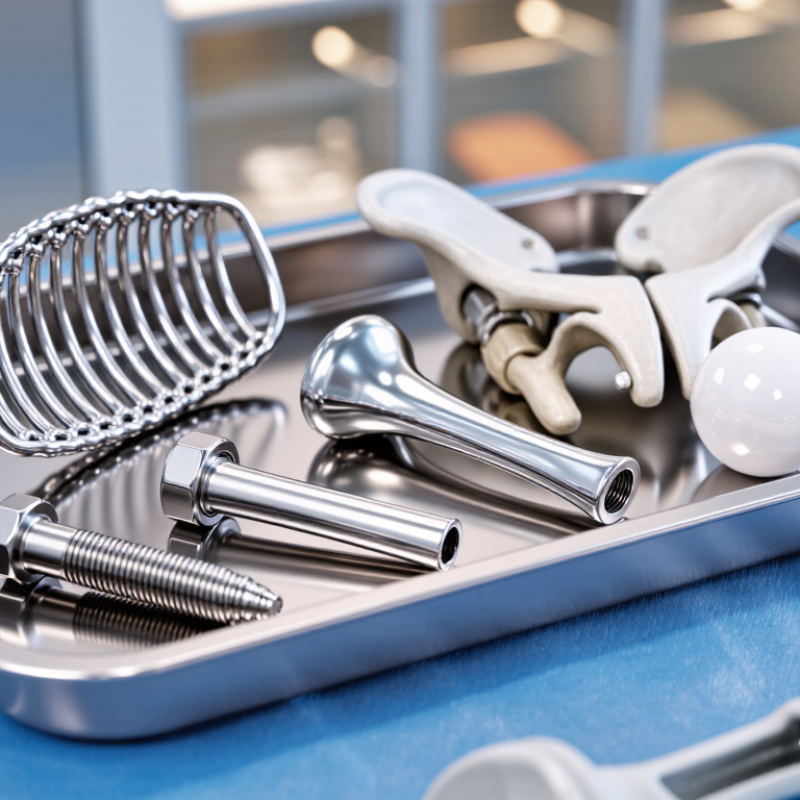
Orthopedic implants use several material families. Titanium alloys are lightweight, strong, and generally well tolerated by bone. Cobalt-chromium alloys offer high wear resistance in joint components. Stainless steel remains practical for selected trauma devices. Ceramic surfaces can reduce friction, while ultra-high-molecular-weight polyethylene provides a durable bearing surface. Spinal implants may also use PEEK, a radiolucent polymer that helps imaging review.

Material choice affects more than the raw purchase price. Ceramic parts need strict dimensional control and careful inspection. Titanium may require specialized machining or surface treatment. Polymer components need wear testing, sterilization validation, and long-term stability checks. The FDA’s 2023 guidance on ISO 10993-based biocompatibility evaluation shows how extensive material safety assessment can become. The 2023 American Joint Replacement Registry Annual Report covered more than two million hip and knee procedures, highlighting the scale of real-world performance tracking. Still, registry data does not create a simple price table. A basic ranking can mislead.

Tips: Ask what the bearing pair contains, not only the implant’s headline material. Request the testing standard, expected service life, and revision data. Compare the complete hospital estimate, including instruments and follow-up care. Material alone does not explain every quote. That part deserves more scrutiny.

How Material Properties Affect Implant Performance

Implant prices vary because material properties shape performance, manufacturing, and testing requirements. Titanium alloys have a lower elastic modulus, near 110 GPa, while cobalt-chromium alloys approach 210–230 GPa. Cortical bone usually measures about 7–30 GPa, according to reported biomechanical data in NCBI-reviewed literature. This difference matters. A stiffer alloy may resist deformation, but excessive stiffness can increase stress shielding around the bone.

Titanium supports bone integration and offers strong corrosion resistance. Its surface, however, often requires controlled treatment and strict cleaning. Cobalt-chromium provides high hardness and wear resistance, which can benefit load-bearing components. It is also denser and harder to machine. Ceramic materials offer very low wear in selected joint applications, but their brittleness demands precise design and inspection. Small defects can matter. Polyethylene reduces friction and weight, yet oxidation and long-term wear remain important concerns.

The American Joint Replacement Registry’s 2023 Annual Report covered more than three million hip and knee procedures, showing the scale of long-term implant monitoring. Registry evidence can reveal revision patterns that laboratory tests miss. ASTM F75 and ASTM F136 also define material requirements for cobalt-chromium and titanium implant alloys. These standards support consistency, not guaranteed outcomes. A cheaper material may reduce manufacturing costs, but it can require different coatings, polishing, or follow-up evaluation. The trade-off is real. Material selection is never perfectly tidy, and price alone cannot predict clinical performance.

Why Do Orthopedic Implant Prices Vary by Material?

How material properties affect implant performance

Representative elastic-modulus values at room temperature show why material selection matters. Cobalt-chromium and 316L stainless steel are much stiffer than bone, which supports high-load applications but may increase stress shielding. Titanium alloys provide a lower modulus and high strength-to-weight performance, while PEEK is closer to bone stiffness but usually requires reinforcement or specialized design for demanding load-bearing applications. Final implant prices also reflect processing complexity, machining, sterilization, testing, and regulatory requirements—not material properties alone.

Values shown are representative typical ranges for commonly used implant-grade materials; exact values vary with alloy grade, processing method, and test conditions.

Manufacturing and Processing Costs by Material

Why Do Orthopedic Implant Prices Vary by Material?

Manufacturing and Processing Costs by Material

Material choice changes nearly every production step. Titanium often requires precision machining, bead blasting, anodizing, and strict surface inspection. Its high strength-to-weight ratio helps implants perform well, but it can increase tool wear and machining time. Cobalt-chrome is harder to cut and polish. That hardness may raise energy use, tool replacement, and finishing costs.

Additive manufacturing adds another cost layer. The 2024 Wohlers Report valued the global additive manufacturing industry at 20.035 billion dollars in 2023, with 13.5% growth. However, growth does not mean simple production. Porous titanium implants need powder control, support removal, heat treatment, cleaning, and inspection. FDA guidance on additive manufactured medical devices also emphasizes process validation and post-processing controls. These controls require trained staff, documented procedures, and repeat testing.

Tips: Compare the full process, not only the raw material price. Ask for machining hours, powder recovery rates, inspection methods, and sterilization costs. Polymers may reduce machining expenses, especially at higher volumes, but tooling and medical-grade traceability still matter. A simple material ranking can mislead. Manufacturing conditions vary between facilities. Even experienced buyers should challenge optimistic estimates. A small design change may reduce polishing time, yet increase inspection work. That trade-off deserves careful review.

Why Do Orthopedic Implant Prices Vary by Material? - Manufacturing and Processing Costs by Material

Material Typical Orthopedic Uses Density
(g/cm³)
Common Manufacturing Route Indicative Implant-Grade Feedstock
(USD/kg)
Processing Cost Index
(316L = 100)
Main Processing Cost Drivers
316L Stainless Steel Trauma plates, screws, wires, and selected temporary fixation devices 7.9 Bar or tube machining, cold working, investment casting, polishing, passivation, and sterilization 15–40 100 Generally good machinability, but costs rise with complex geometries, tight tolerances, surface finishing, cleaning, and passivation requirements.
Cobalt-Chromium Alloy Hip and knee bearing components, dental and selected trauma implants 8.3–9.2 Investment casting, forging, CNC machining, grinding, polishing, and passivation 25–70 150–220 High hardness and strength increase tool wear, machining time, grinding effort, and scrap risk. Highly polished bearing surfaces require additional finishing.
Ti-6Al-4V Titanium Alloy Joint replacement stems, bone plates, screws, spinal implants, and dental implants 4.4 Forging, CNC machining, electron-beam or laser powder-bed fusion, blasting, anodizing, and sterilization 35–90 180–280 Low thermal conductivity and chemical reactivity require conservative cutting parameters, specialized tooling, controlled atmospheres, and substantial post-processing.
PEEK Spinal cages, interbody devices, trauma components, and radiolucent structural parts 1.30–1.32 Medical-grade injection molding, compression molding, machining, or additive manufacturing 80–180 220–400 High resin cost, strict thermal-process control, specialized tooling, dimensional stability requirements, and validation of molding or additive-manufacturing parameters.
UHMWPE Acetabular liners, tibial inserts, patellar components, and other bearing surfaces 0.93–0.94 Compression molding or ram extrusion, CNC machining, machining of bearing surfaces, cleaning, and sterilization 20–60 130–240 Cross-linking or stabilization treatments, oxidation control, precision machining, long-term cleanliness requirements, and dimensional inspection add cost.
Alumina Ceramic Ceramic femoral heads and selected high-wear joint bearing components 3.8–3.95 Powder pressing or injection molding, sintering, diamond grinding, lapping, and polishing 50–150 350–600 High-temperature sintering, shrinkage control, brittle-fracture risk, diamond tooling, tight roundness tolerances, and extensive surface inspection.
Zirconia-Based Ceramic Ceramic femoral heads and selected dental or joint-bearing applications 5.9–6.1 Powder forming, high-temperature sintering, diamond grinding, polishing, and non-destructive inspection 80–250 400–700 Specialized ceramic powder, strict sintering control, phase-stability requirements, diamond finishing, and rigorous defect screening contribute to higher processing costs.

Note: The feedstock prices and processing-cost indices are indicative planning ranges for implant-grade materials and are not supplier quotations. Actual costs vary with part size, design complexity, production volume, certification requirements, machining tolerances, surface finish, sterilization method, and quality-control scope. Feedstock ranges are shown in USD per kilogram; the processing index is a comparative measure rather than a market price.

Biocompatibility, Safety, and Regulatory Requirements

Why Do Orthopedic Implant Prices Vary by Material?

Biocompatibility strongly influences orthopedic implant pricing. Titanium alloys are widely used because they combine strength, corrosion resistance, and favorable tissue response. Cobalt-chrome offers greater wear resistance, but its machining and surface finishing can require more controlled production. PEEK is lightweight and radiolucent. However, it demands careful processing and extensive evidence for long-term performance. Ceramics can reduce wear, yet brittleness raises design and quality-control concerns.

Biocompatibility is not a checkbox.

Safety requirements add costs beyond the raw material. Manufacturers must assess cytotoxicity, sensitization, irritation, and implantation effects under ISO 10993. FDA guidance also expects biological evaluation to match the device’s contact duration and tissue exposure. Testing may include chemical characterization, sterilization validation, fatigue testing, and packaging studies. Small differences in geometry can change the evidence burden.

The FDA’s FY2023 MDUFA performance report uses 90 FDA days as a 510(k) review target and 180 FDA days for many PMA decisions. These timelines do not equal approval time, but they show how regulatory review consumes specialized resources. Traceability, supplier audits, process validation, and post-market monitoring also shape the final price.

Material alone does not explain every quotation. The picture is imperfect. A cheaper alloy may require more coating, testing, or clinical evidence, while a costly material may simplify another stage.

That trade-off deserves closer review.

How Material Choice Influences Overall Implant Pricing

Why Do Orthopedic Implant Prices Vary by Material?

Material choice strongly influences an orthopedic implant’s overall pricing. Titanium alloys are lightweight, corrosion-resistant, and commonly selected for bone fixation. Their processing can require precise machining and surface treatments. Cobalt-chromium alloys offer high strength and wear resistance, but they may demand more complex manufacturing. Ceramic components can reduce friction in some joint applications. However, they often require strict quality control because small defects may affect performance.

Material alone never explains the invoice. A supplier also considers raw material costs, machining time, sterilization, packaging, and mechanical testing. Certain materials need specialized equipment or additional inspection. These steps increase production expenses before the implant reaches a hospital. Clinical evidence, expected service life, and compatibility with imaging procedures also influence purchasing decisions. The most expensive option is not automatically the best option. Patient anatomy and surgical goals must guide the final selection.

Tips: Compare implants by total clinical value, not purchase price alone. Ask whether the material has reliable long-term evidence. Review testing standards, coating details, and revision considerations with qualified orthopedic professionals. Pricing data can also be incomplete. Hospital contracts and regional supply conditions may change the final cost. That part is easy to overlook.

FAQS

Which materials are commonly used in orthopedic implants?

Common choices include titanium alloys, cobalt-chromium alloys, stainless steel, ceramics, polyethylene, and PEEK. Each has different properties.

Why can two implants with similar designs have different prices?

Material processing may differ. Machining, surface treatment, inspection, sterilization, and testing can raise the final cost.

Is titanium always the most affordable implant material?

Not necessarily. Titanium is lightweight and bone-friendly, but specialized machining or coatings may increase expenses.

Why can ceramic components cost more?

Ceramics require tight dimensional control and careful inspection. Small defects may affect performance.

Does the headline material reveal the complete implant cost?

No. The bearing pair, instruments, hospital services, follow-up visits, and regional contracts also affect the invoice.

What should patients ask about the implant material?

Ask about the bearing pair, testing standards, expected service life, coatings, and revision history. Details matter.

Can implant materials affect medical imaging?

Yes. Some materials create less imaging distortion. Certain spinal implants use radiolucent polymers for clearer image review.

Does the most expensive material provide the best clinical result?

Not automatically. Patient anatomy, surgical goals, evidence, and long-term performance should guide the selection.

How can buyers compare implant prices more fairly?

Compare total clinical value, not purchase price alone. Include sterilization, instruments, testing, follow-up care, and possible revision needs.

Conclusion

Orthopedic implant prices vary because different materials offer distinct combinations of strength, weight, corrosion resistance, flexibility, and tissue compatibility. Common options such as stainless steel, cobalt-based alloys, titanium alloys, ceramics, and advanced polymers are selected according to the implant’s location, load-bearing demands, and expected service life. These material properties directly influence performance, including durability, wear resistance, imaging compatibility, and the risk of adverse biological reactions.

Manufacturing and processing requirements also contribute significantly to cost. Some materials require specialized machining, molding, coating, surface treatment, or heat processing, while others demand more complex quality-control procedures. In addition, biocompatibility testing, sterilization validation, safety assessments, and regulatory documentation can increase development and production expenses. Therefore, the question “Why do orthopedic implants prices vary by material and specification” is best answered by considering the complete relationship between material selection, engineering performance, manufacturing complexity, clinical safety, and compliance requirements.

Ethan

Ethan

Ethan is a seasoned marketing professional with a deep expertise in our company's innovative product line. With a passion for sharing knowledge and insights, he takes the lead in regularly updating our corporate blog, where he explores industry trends, product features, and effective marketing......