When considering orthopedic implants for purchase, the decision often leads to two prominent materials: PEEK and titanium. These materials are popular in the medical field for specific reasons. However, knowing their differences is crucial for healthcare professionals and patients alike. What is the difference between PEEK and titanium orthopedic implants for purchase? Each material presents unique characteristics.
PEEK offers excellent biocompatibility and elasticity. It's widely regarded for its ability to mimic natural bone behavior. On the other hand, titanium is known for its strength and durability. It has a long history in orthopedic surgery, proving its reliability over time.
Choosing between PEEK and titanium involves understanding their advantages and limitations. The right choice can significantly impact recovery and overall patient satisfaction. Some may argue that titanium is the only viable option. However, PEEK's innovative properties cannot be overlooked. Each implant has its merits that can shaped outcomes. The decision should consider individual patient needs and specific clinical situations.
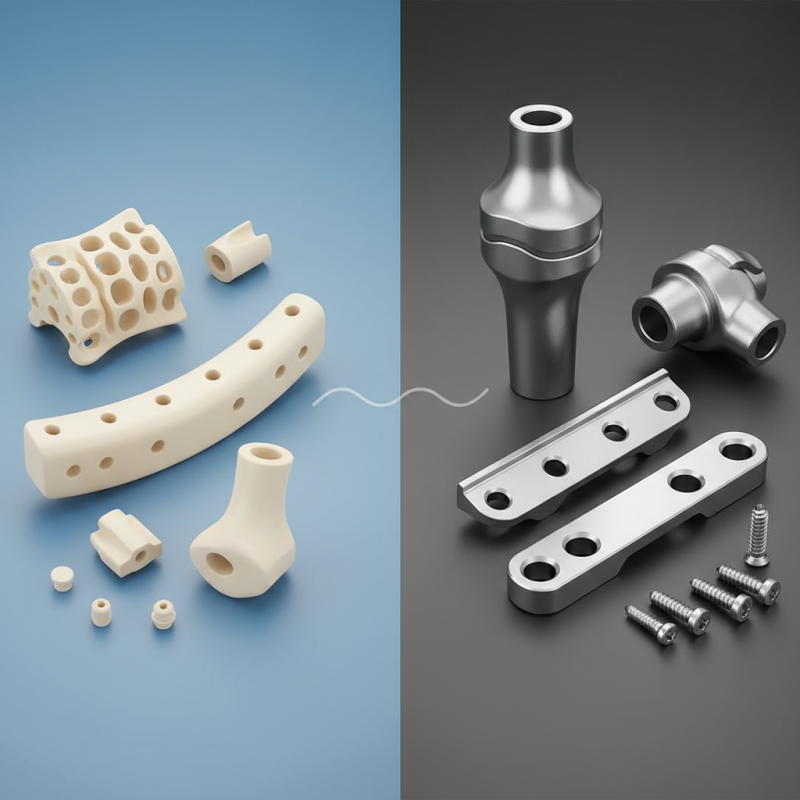
Overview of PEEK and Titanium in Orthopedic Applications
PEEK (Polyether Ether Ketone) and titanium are two materials widely used in orthopedic implants. PEEK is often chosen for its superior biocompatibility and elasticity. A study from the Journal of Biomedical Materials Research highlights that PEEK has a Young’s modulus similar to that of human bone. This property allows for better stress distribution, potentially reducing the risk of implant failure. Conversely, titanium offers enhanced strength and rigidity. It is recognized for its durability, crucial for load-bearing applications.
While PEEK provides benefits, it is not without challenges. Its limited ability to bond with bone requires surface modifications for optimal integration. In contrast, titanium's osteoconductivity fosters direct bone attachment. Despite advancements, some studies suggest titanium implants may face corrosion and wear issues over time. The American Academy of Orthopaedic Surgeons reports that the development of alternative materials, like PEEK, aims to address long-term complications seen with metal implants.
The choice between PEEK and titanium is nuanced. Factors include patient needs, the nature of the injury, and desired outcomes. Each material presents unique advantages and drawbacks. This complexity necessitates ongoing research and clinical trials to refine their applications in orthopedic surgery. As the field progresses, understanding these differences remains vital for improved patient care.
Mechanical Properties: Strength, Stiffness, and Load Bearing
When evaluating orthopedic implants, mechanical properties like strength and stiffness are paramount.
PEEK, a polymer, exhibits unique advantages. It provides high strength while being lighter than titanium. This can reduce the overall load on the bone. Additionally, PEEK's stiffness is more closely aligned with that of natural bone, promoting better integration and reducing stress shielding.
Titanium, renowned for its exceptional strength, stands up well under heavy loads. Its stiffness, however, is significantly higher than that of bone. This discrepancy can lead to complications such as stress shielding, where surrounding bone becomes weaker due to the implant taking on most of the load. However, titanium has a long history of reliable performance. Its biocompatibility is well-documented, making it a trusted choice for many surgeons.
Innovative applications of these materials continue to grow. The choice between PEEK and titanium may hinge on specific clinical situations. Each material presents distinct challenges and benefits. Understanding these differences is crucial for optimal patient outcomes. Further research can refine these choices and improve implant performance.
Biocompatibility and Biological Response to PEEK vs. Titanium
PEEK (Polyether Ether Ketone) and titanium are popular choices for orthopedic implants. Their biocompatibility is a crucial factor in determining their effectiveness. PEEK is a polymer that shows excellent compatibility with human tissues. It has a low inflammatory response and minimal toxicity. Research indicates that PEEK has a similar or lower rate of adverse biological responses compared to titanium. However, titanium has a long-standing history in orthopedic applications, with extensive clinical data supporting its use.
The biological response to these materials can differ significantly. Titanium promotes osseointegration, which helps the bone bond well with the implant. A study published in the Journal of Biomedical Materials Research found that titanium implants can achieve nearly 100% integration by 12 weeks. PEEK, while advantageous in terms of elasticity and fatigue resistance, may not integrate with bone as effectively. Some studies note slower integration rates, raising questions about its long-term effectiveness.
Tips: When choosing between PEEK and titanium, consider the specific requirements of the patient. Analyze the expected activities. A lighter implant may benefit physical therapy outcomes. Monitoring individual responses to these materials is essential for tailoring orthopedic solutions. More research is necessary to fully understand the long-term implications of using PEEK in various orthopedic scenarios.
Radiopacity and Imaging Considerations in Implant Choice
When selecting orthopedic implants, radiopacity is a crucial consideration.
PEEK and titanium exhibit distinct imaging characteristics. Titanium is highly radiopaque. It shows up clearly on X-rays. This quality aids surgeons in monitoring the implant's position post-surgery.
Studies indicate that titanium can provide clear images, facilitating effective follow-ups. However, PEEK is less radiopaque. It may require additional imaging techniques to ensure proper alignment and placement during follow-ups.
While PEEK provides benefits like reduced stress shielding, its low radiopacity poses challenges. According to data from clinical studies, implants that are less visible may lead to diagnostic difficulties. Surgeons must rely on their experience and intuition. Titanium, though heavier, remains a trusted option. Its consistent clarity on imaging supports better surgical outcomes in many cases.
A balance between materials is vital. Factors like anatomy, healing time, and individual patient needs influence the implant choice. Continuous research is essential to enhance both imaging technology and implant design. This field evolves rapidly, and ongoing discussions about radiopacity are crucial. Finding effective solutions remains a shared goal among orthopedic professionals.
Long-term Performance and Wear Resistance of PEEK and Titanium
PEEK and titanium are two major materials used in orthopedic implants. Their long-term performance and wear resistance have significant implications for patient outcomes. PEEK, a thermoplastic polymer, contains a high long-term fatigue resistance. Research indicates that PEEK has a wear rate significantly lower than traditional metals. A study published in the Journal of Biomedical Materials Research showed that PEEK implants exhibited roughly 25% less wear over a 5-million cycle test compared to titanium implants.
On the other hand, titanium is known for its exceptional biocompatibility and strength. Its surface properties allow for effective osseointegration, crucial for implant stability. However, titanium implants can suffer from wear debris that may lead to osteolysis. In 2020, a report by the American Academy of Orthopedic Surgeons highlighted that approximately 6% of patients experienced adverse reactions associated with titanium wear debris.
Interestingly, while PEEK is less prone to wear, its mechanical properties are generally lower than titanium. This could lead to concerns regarding load-bearing applications. Ultimately, understanding these intricate differences is vital for orthopedic surgeons when considering implant selection for enhanced patient longevity and comfort. The balance between PEEK and titanium presents a fascinating challenge for future orthopedic innovations.
Comparative Analysis of PEEK and Titanium Orthopedic Implants
FAQS
: Strength and stiffness are crucial for orthopedic implants. They impact load-bearing capacity.
PEEK is lighter than titanium. This reduction in weight can decrease overall load on the bone.
Radiopacity helps surgeons monitor implant position using X-rays. Clear imaging supports better surgical follow-ups.
Low radiopacity may lead to diagnostic difficulties. Additional imaging may be necessary for proper implant assessment.
PEEK has a lower wear rate. It shows about 25% less wear over long cycles compared to titanium.
Titanium can produce wear debris, which may lead to osteolysis in some patients. This can cause adverse reactions.
Stiffness differences can cause stress shielding. This might weaken surrounding bone and affect overall recovery.
Continuous research helps refine material choices. It aims to enhance both imaging techniques and implant performance.
Each material has unique benefits and challenges. This knowledge aids in selecting the best option for each patient.
Factors like anatomy and healing time vary. These differences influence which implant material will be most effective.
Conclusion
This article explores the key differences between PEEK (Polyether Ether Ketone) and titanium orthopedic implants, which are both popular choices in modern orthopedic applications. It begins with an overview of their applications, highlighting the unique advantages each material offers. The mechanical properties comparison delves into their strength, stiffness, and load-bearing capabilities, essential factors in determining implant performance. The discussion on biocompatibility emphasizes how each material interacts with biological tissues, crucial for patient outcomes.
Furthermore, considerations surrounding radiopacity and imaging are addressed, showcasing how these properties can impact surgical planning and post-operative assessments. Lastly, the long-term performance and wear resistance of PEEK and titanium are critically analyzed, providing insights into the longevity and reliability of these implants. Overall, this article aims to clarify "What is the difference between PEEK and titanium orthopedic implants for purchase," assisting healthcare professionals in making informed decisions about implant selection.
 Horaizon Orthopedic Implants
